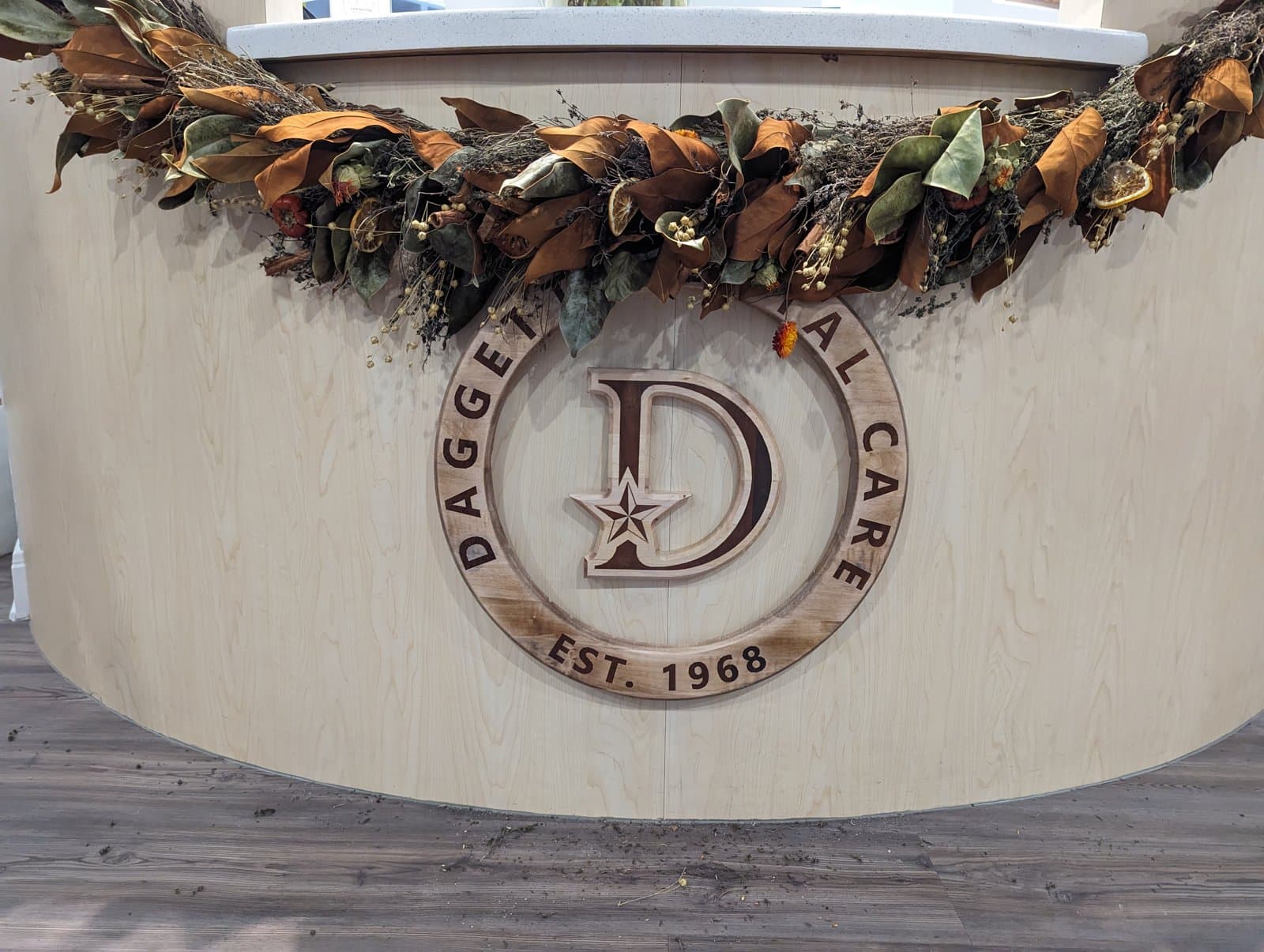
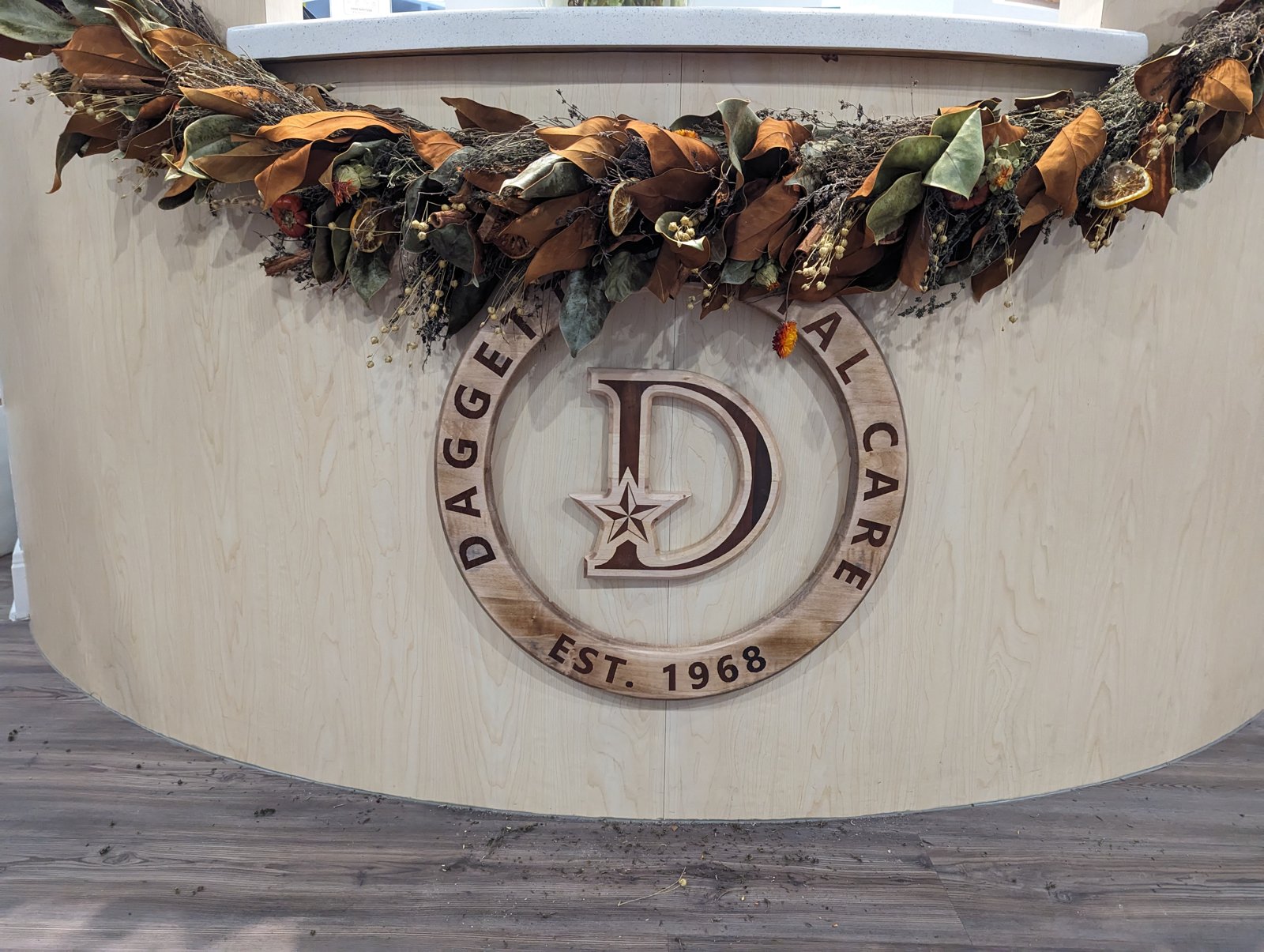
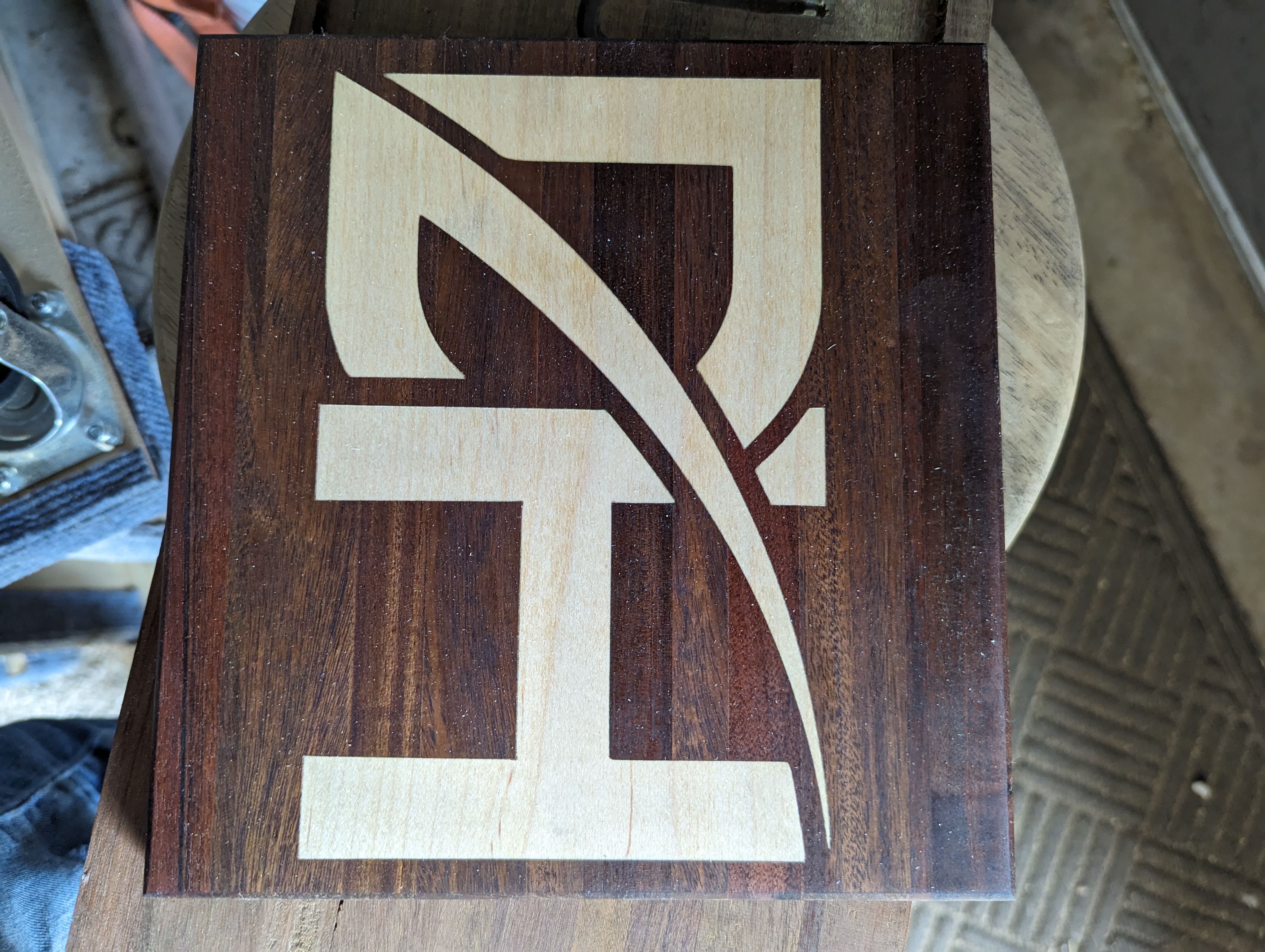
In 2023 we made a round sign for Daggett Dental Care. It reads "DAGGETT DENTAL CARE" with "EST. 1968" below. It was programmed in VCarve, cut on a CNC router and made as an inlay in contrasting woods. That is a CNC inlay, and the same process can be used on solid wood cabinet doors, drawer fronts and built-in panels.
What a CNC inlay is
An inlay is two pieces of wood fitted together. The router cuts a pocket into one piece in the shape of the design. Then it cuts a matching insert from a second wood with a different color. The insert is glued into the pocket, and the face is sanded flush.
The result is a design that is part of the wood itself. It isn't paint or a decal. Sanded flush, a finished inlay feels like one surface under your hand.
How we make one
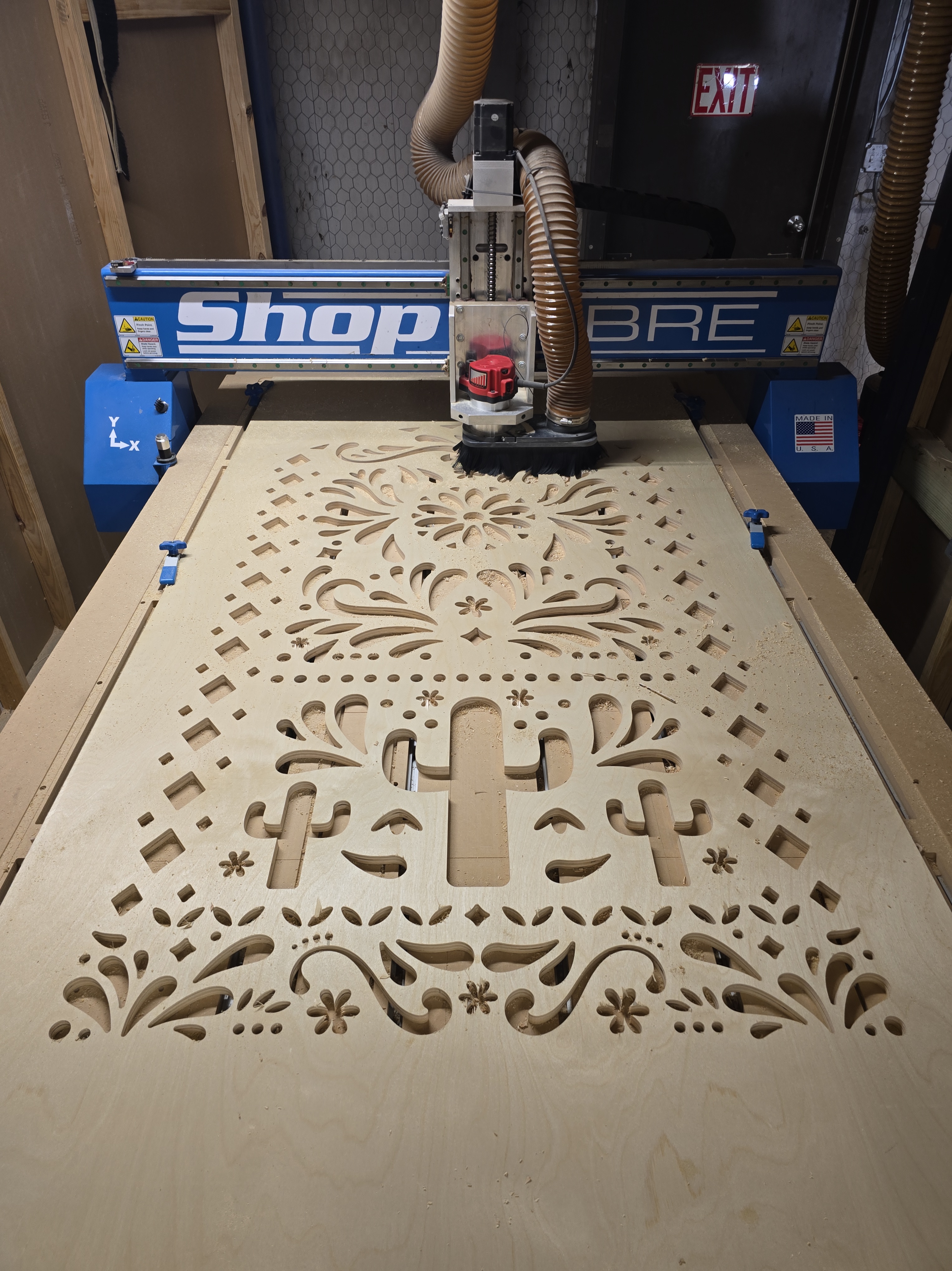
The router is in our shop in Converse. We program inlays in VCarve, which is design software built for CNC carving and inlay work. The steps go like this:
- We settle the design with you: the artwork, the lettering and where it goes.
- We pick the two woods, one for the background and one for the insert, so the design reads clearly.
- We program the pocket and the matching insert in VCarve.
- The router cuts both pieces.
- We glue the insert into the pocket, sand the face flush, then finish it.
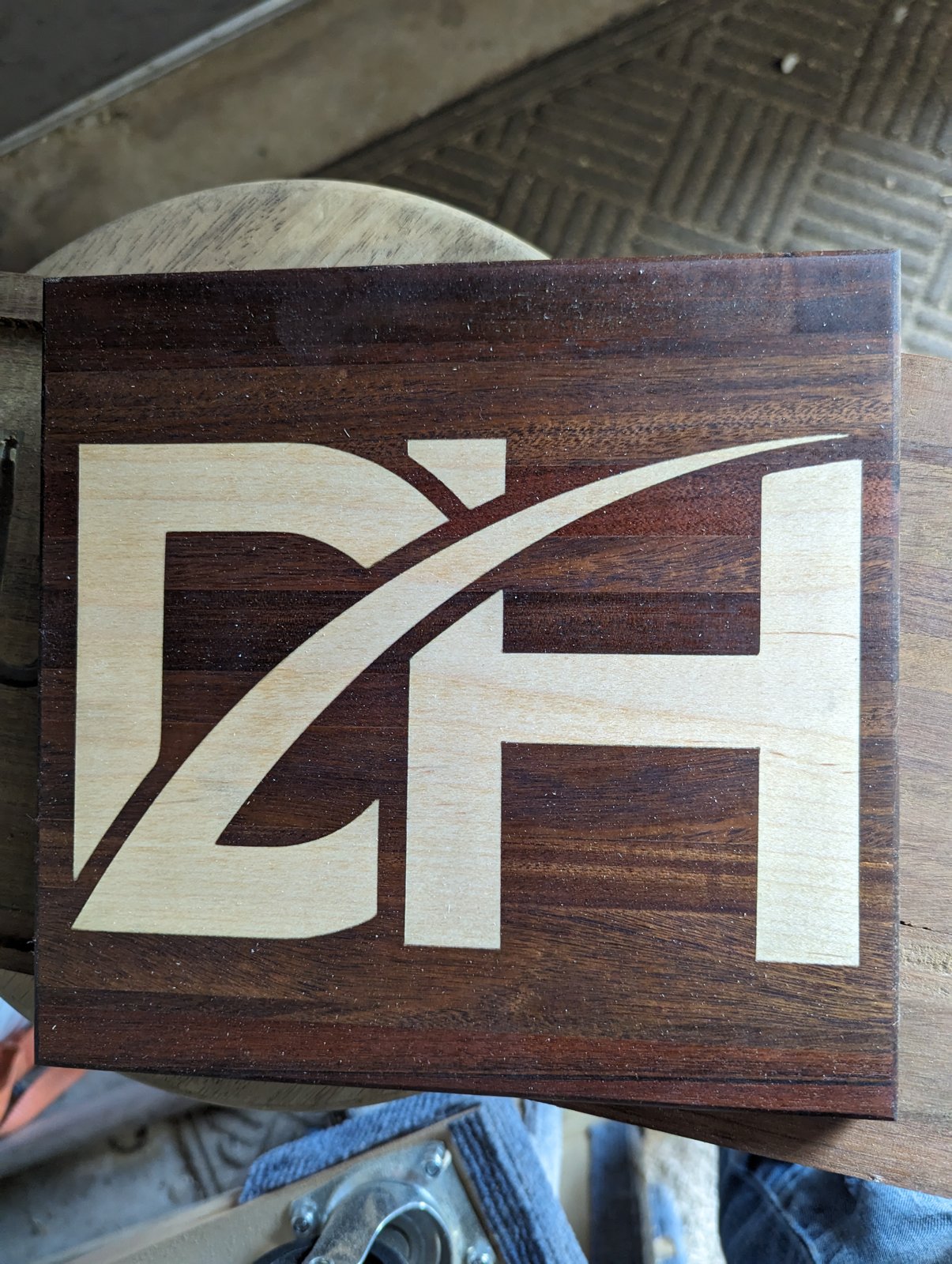
Another example is a logo panel we made for ourselves: light maple set into walnut.
You can see more of our CNC work in our CNC projects gallery.
Where inlays work, and where they don't
Inlays need solid wood, or stock thick enough to hold the pocket. That makes them a fit for solid wood cabinet doors, drawer fronts, built-in panels and signs. They don't work in thin veneer, because there isn't enough material to cut into.
San Antonio summers are hot and often humid, and two woods glued tight against each other each move with humidity. So we pair species that move about the same and plan the finish to slow how fast the wood takes on and loses moisture.
If you already have cabinets installed, we don't inlay into them in place. We would make a new door or panel with the inlay and swap it in. If you're planning new cabinets or a built-in, the inlay can be part of the build from the start. Our custom cabinetry page covers that side of our work.
What drives the cost
We don't publish a price for inlays. We quote each one once the design is settled, because a few things move the number:
- Size. A bigger design means more cutting and more material.
- Detail. Fine lines and small letters take more cutting and more fitting.
- The woods. The species you choose affect the cost.
- One piece or a repeat. The programming is done once, so the same design on several doors spreads that work out.
Does an inlay add value to your home?
We don't know of any data showing an inlay raises a home's sale price.
The value is personal. It's a mark that's yours: a family initial, a company logo, a pattern you picked. And because an inlay goes on a part that can be replaced, like a door, a panel or a sign, a future owner who wants something different can swap that piece out.
Thinking about one?
If you've got a logo, monogram or pattern in mind, send it over through our contact page and we'll tell you what it would take.