We build decks in three materials: cedar, composite and ipe. Our cedar and composite decks have ranged from a small cedar platform at $5,000-$10,000 to a big multi-level rebuild at $50,000-$75,000.
If you want the short answer: composite is the better long-term investment once you count what it costs to keep resealing cedar. Some people still want real wood, and that's a fair choice, because composite gets hot in direct sun. Which way we'd lean depends on your yard: how much shade the deck gets from the house, trees or a cover, and how close it sits to a pool, a hot tub or a lake.
We haven't built decks out of PVC, aluminum, bamboo or redwood, so we're leaving them out. The decks we rebuild sit on pressure-treated frames, but we haven't built one with pressure-treated boards on top.
What our decks have cost
Most of the decks we build run $10,000-$25,000. Very large ones run $50,000-$75,000. The numbers below are full job value for our own decks, with the year each one was built. Prices from past years won't match today's, so we give a written estimate once we've seen your site.
Cedar
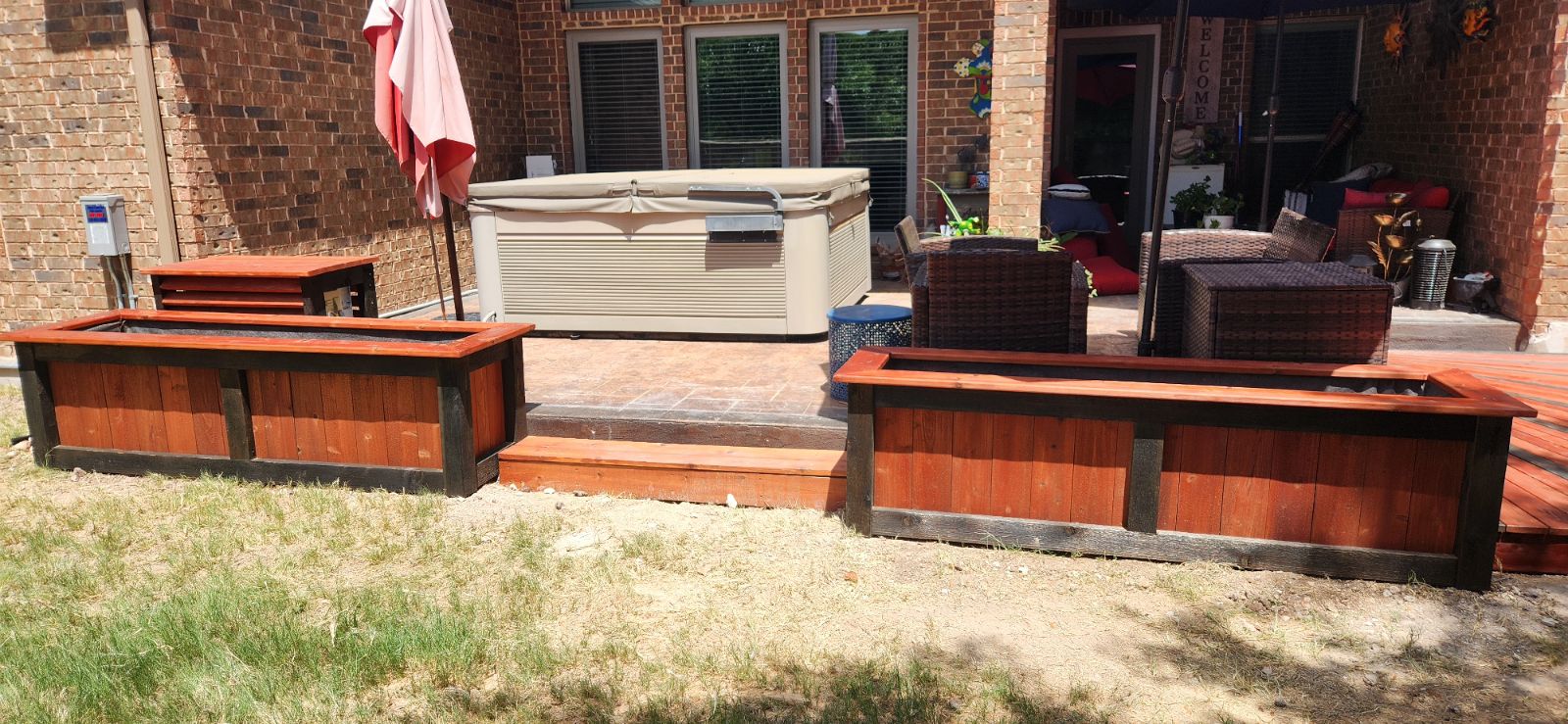
- Curved cedar platform step with a sunburst pattern and a two-tone stain, plus cedar planter boxes with stairs, 2023: $5,000-$10,000.
- 511 sq ft cedar deck torn out and rebuilt on a hillside lot in Boerne, 2026: $15,000-$25,000. It has a stair and walkway leg, a new pressure-treated frame, and it was resealed when we finished.
- Cedar deck around a pool in Castle Hills, 2023: the deck itself was in the $15,000-$25,000 range. With the attached patio cover (standing seam metal roof), a privacy wall and an awning, the whole project was $50,000-$75,000.
- Cedar deck rebuild at a lake house on Medina Lake, 2024: $50,000-$75,000. Demo and haul-off, a new pressure-treated frame, new cedar decking and railing, stain and seal, new steps and a handrail down to the lake deck, and a trip charge for the distance.
Composite
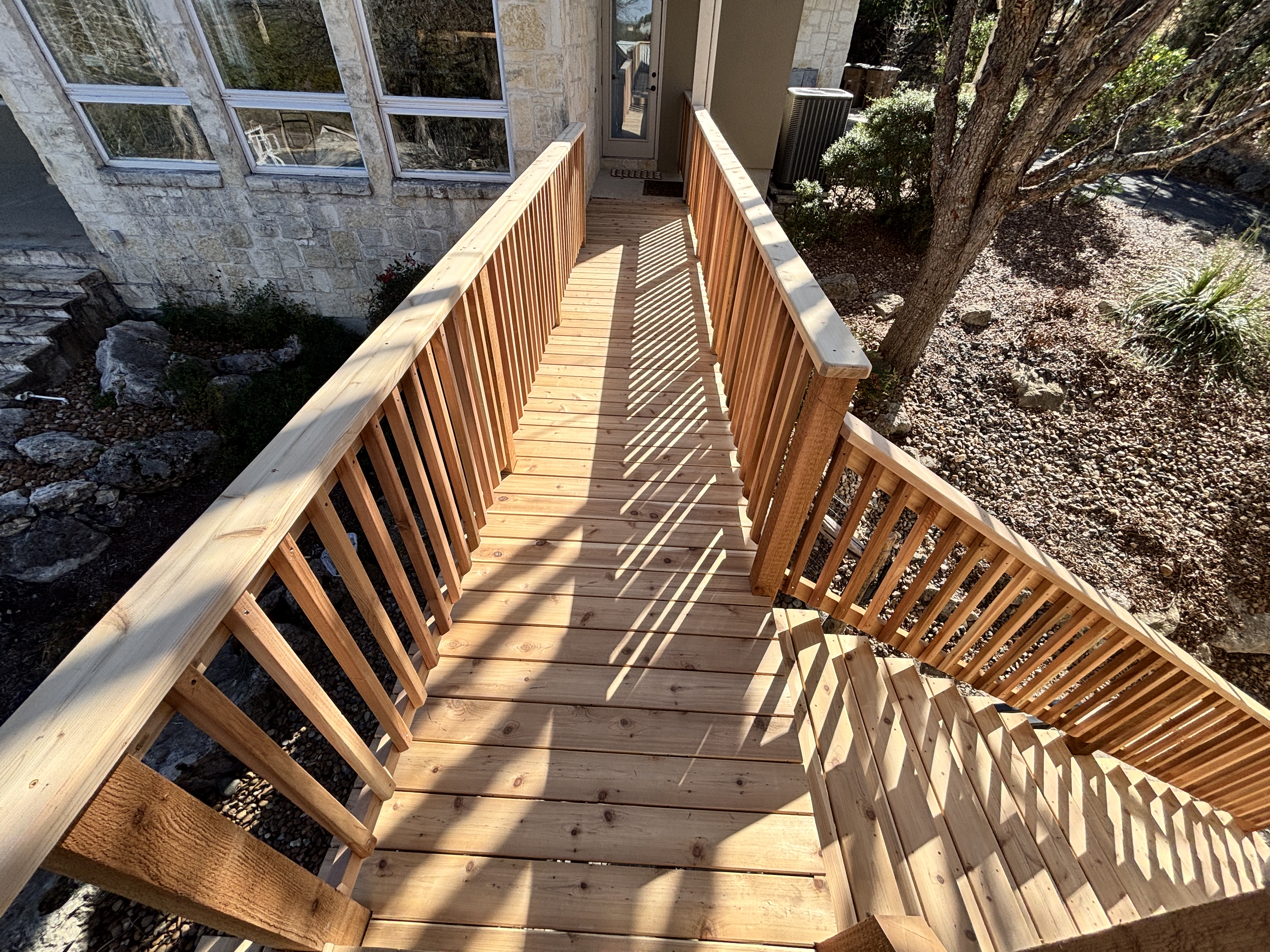
- Low 10x20 composite deck with a cedar rail and black metal balusters, Schertz, 2025: $10,000-$15,000. We took out the old deck, reframed it in pressure-treated lumber and put down composite. We bought all the materials, so that band is the whole job.
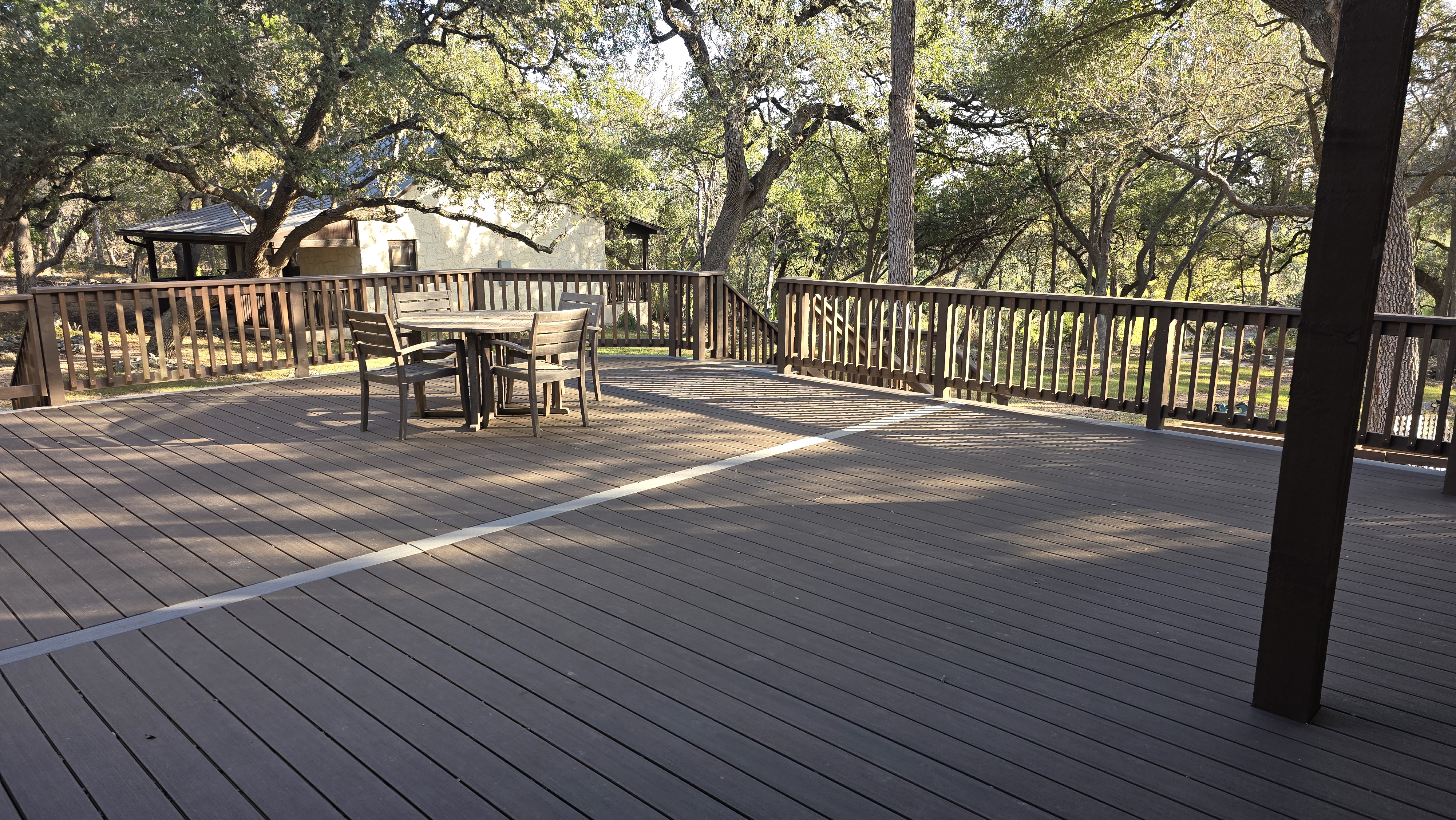
- Multi-level composite rebuild in Boerne, 2025: the deck work was $50,000-$75,000. That's a lower deck of about 800 sq ft, an upper deck of about 300 sq ft, stairs and a landing, with stained cedar railing and lattice skirting.
Ipe
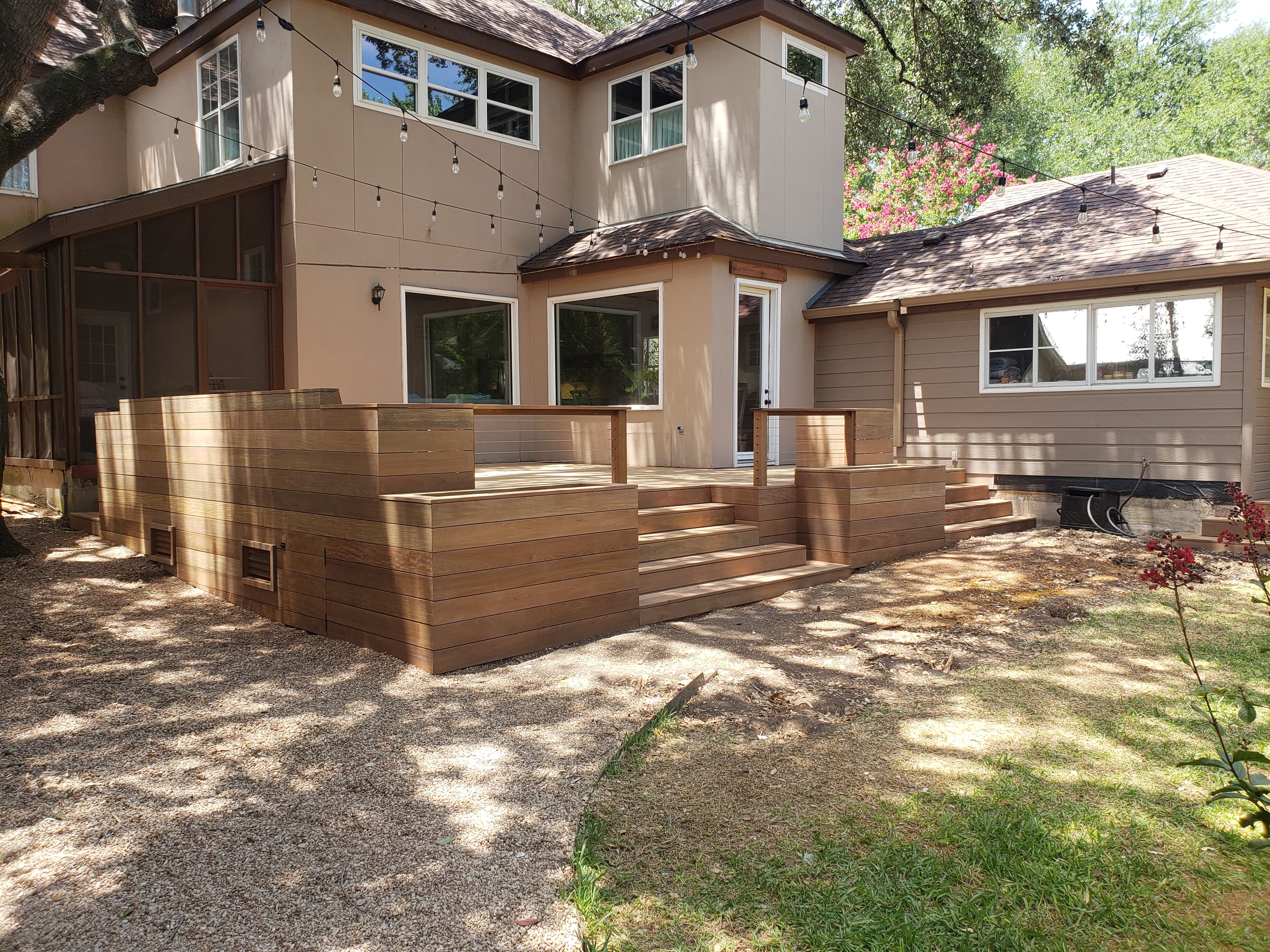
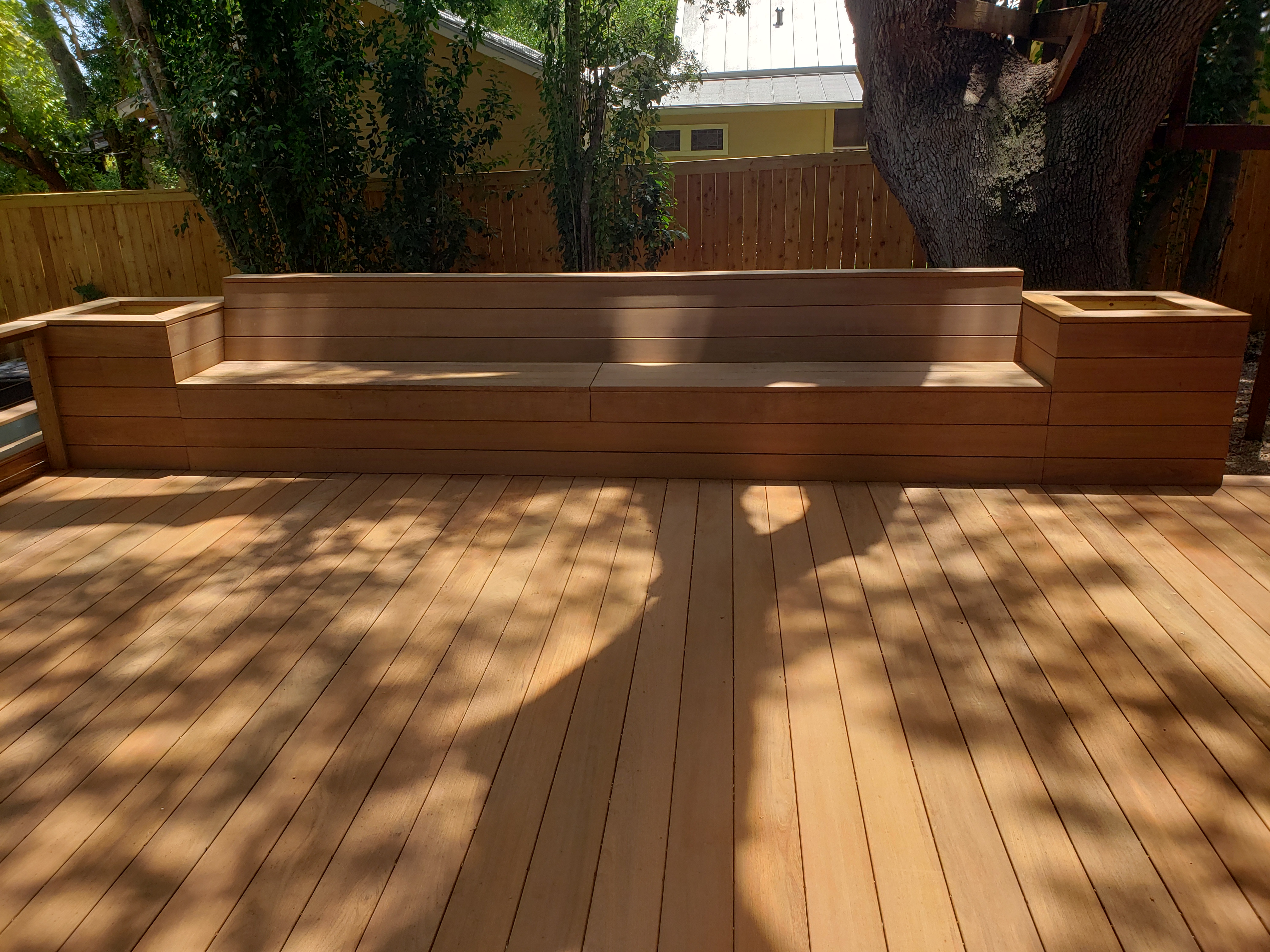
We've built one ipe deck, a multi-level deck outside Boerne in 2022, and it was $50,000-$75,000. That's a 2022 number and we're not putting a current ipe price on it.
The wood alone was more than half the job. After that the cost was the built-in benches and planters, then the stainless cable railing. Ipe is also slow to put down. Every fastener gets pre-drilled and countersunk, or it goes in as a hidden clip in a routed groove. Deck labor on that job ran 3-4 weeks.
Ipe doesn't hold a finish that sits on the surface, like a stain or sealer. Those peel within a season or two. So you either refresh it with a penetrating UV oil now and then, or you let it weather to a silver gray. The Boerne ipe deck project page has the benches with storage under the seats, the steel-lined planters and the rest of it.
What moves the price
The material is the obvious one. On the ipe deck it was most of the bill.
Built-ins are the one people miss. Benches, planters and stairs price a deck as much as its square footage does, and two decks the same size can land in very different places.
On a rebuild, tearing out and hauling off the old deck is its own line. Distance shows up too: the Medina Lake job carried a trip charge.
Then there's the ground. Boerne sits on limestone, so setting piers there is a rock problem, not a dirt problem. That's the biggest cost difference between a Boerne deck and one on San Antonio clay.
What's under the boards
Whatever goes on top, the frame underneath is pressure-treated lumber. A few things we do down there:
- Post bases that stand each post off the concrete, to limit rot.
- Piers sized for the soil. In Schertz's expansive clay ours are 12 in. wide, flared to 16 in. at the bottom, and at least 30 in. deep.
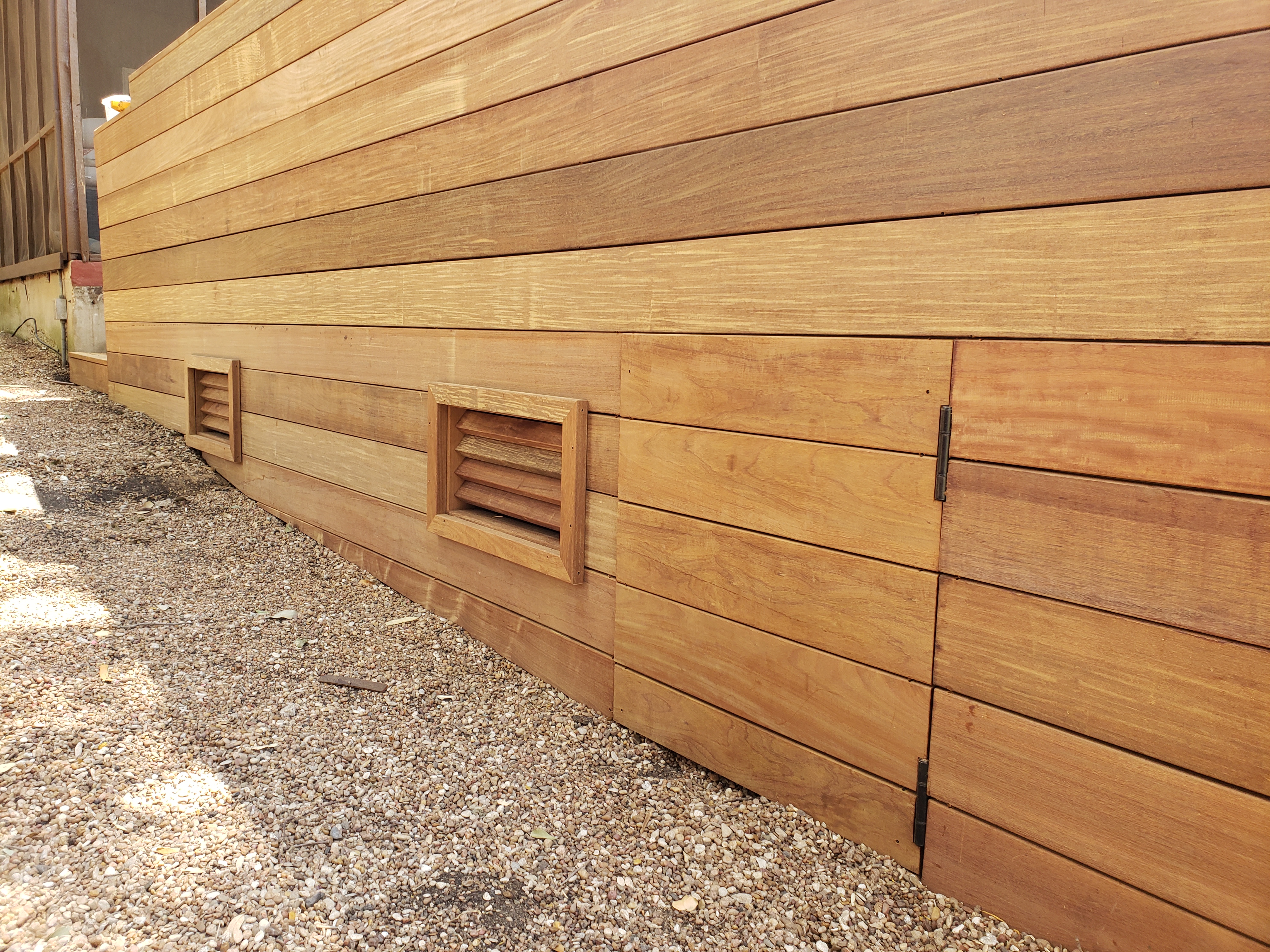
- Skirting that breathes. Closing in under a deck traps moisture, and the frame rots from underneath while the top boards still look fine. The Boerne ipe deck got louvered vents in the skirting and an access door. The 2025 Boerne composite deck has lattice.
How long it takes
One to four weeks for most decks, longer for large rebuilds. Weather can push the schedule. One of us does routine walkthroughs while it's being built.
Permits
We pull the permit when the city requires one, and we draw the permit set ourselves: framing plan, pier detail and construction details.
- Schertz: decks are never exempt, including at-grade decks and repairs. A small at-grade front porch deck we built there in 2026 needed HOA approval first, then the city permit.
- Boerne: assume it needs one.
- New Braunfels: assume it needs one. The only exemption is a small, low, detached deck that doesn't serve an exit door.
- Castle Hills: all decking needs a permit.
- San Antonio: plan on a permit for most decks.
Our deck construction page covers the rest of how we build decks, and there are more photos in the decks gallery.
If you're deciding between cedar and composite, book a visit. We'll look at the shade and what's nearby and tell you which one we'd build.